





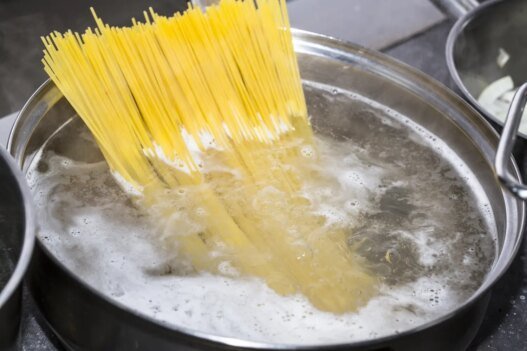
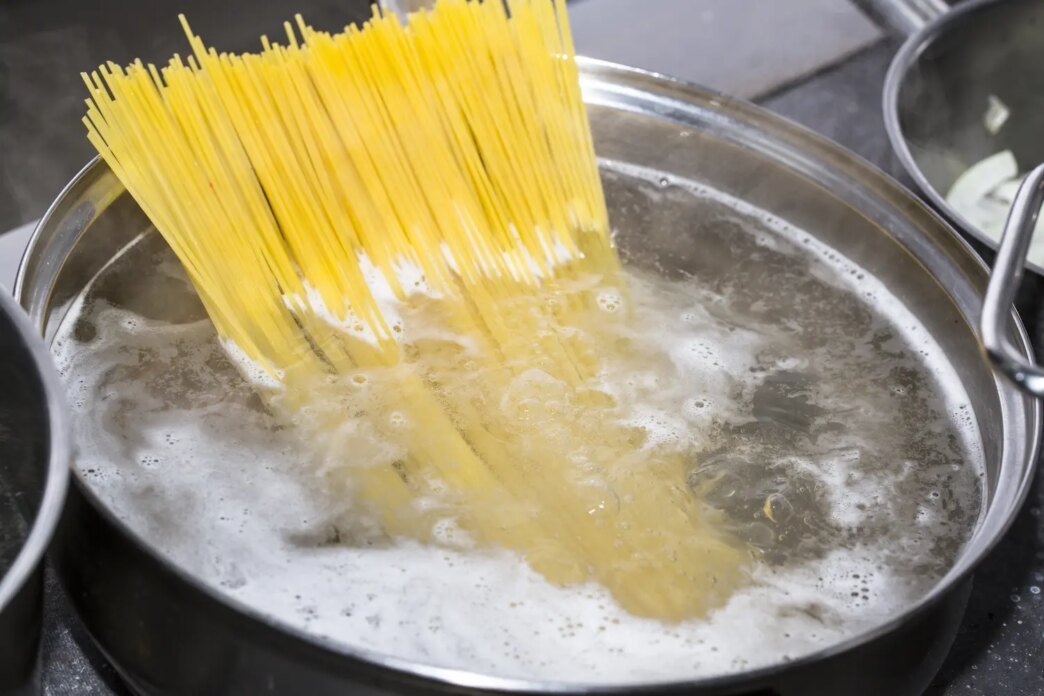
The Italians shout it with one voice, the pasta water always gets salty at this time. End of debate!
In Italy, we take cooking pasta very seriously. And it is certainly not Edda Onorato, a Roman culinary author and photographer who has lived in Aix-en-Provence for many years, who will say the opposite. As she details in a dedicated article on her blog A Sunny LunchTHE pasta secca (aka the dried pasta found in the grocery section of the supermarket) takes pride of place in all transalpine cupboards. “It is our daily bread, like potatoes for a Frenchman or rice for an Indian”she specifies. Which requires putting them in the pan with, nevertheless, a little consideration.
Sung for a long time by our neighbors, the little music of 1-10-100 has finally reached our ears. Doesn’t she tell you anything? This mnemonic rule basically says that you need 1 liter of water with 10 g of salt to cook 100 g of pasta. If the coquettes and others prefer the deep end to the paddling pool, it is not so much for the pleasure of doing lengths as for “move freely”, explains Edda, and thus “cook thoroughly and evenly”. As for salt, although it can be reduced, it should definitely not be avoided. For an obvious question of taste, but also for physicochemical reasons. In particular, it would strengthen the gluten network of pasta, which influences their hold and their elasticity, and would slow down the hydration of starch granules, thus preserving their firmness.
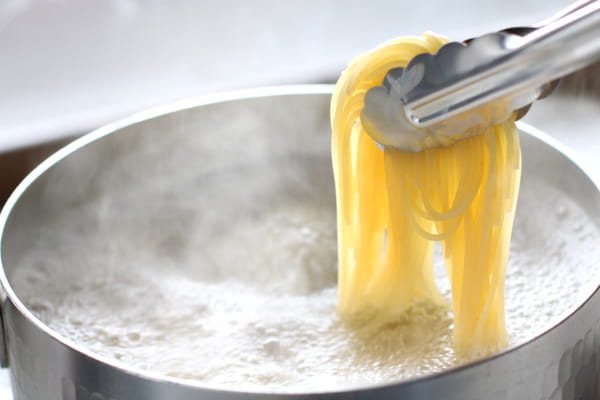
You still have to add it at the right time. On this point, Edda has a clear opinion. For her, you never salt cold. You must first boil the water, then add the coarse salt. For what ? To facilitate its dissolution, but also not to slow down the boiling: “If you put it on at the beginning, the water will take ages to boil!”quips the specialist. Once this pitfall is avoided, the rest theoretically goes off without a hitch.
Once the salted water boils, add all the pasta at once, lower the heat, making sure to maintain the simmer, and let it cook uncovered, respecting the time indicated on the package. We just remember to stir from time to time so that they don’t stick… and pasta!