






Millions of microorganisms are present on every square centimeter of our skin, this is what we call the skin microbiota. In exchange for a comfortable home and food (trace elements, carbon, nitrogen, etc.), these micro-organisms provide multiple functions essential to the good health of our skin and the maintenance of its role as a “barrier function”. Centifolia enlightens you on this natural shield.

The skin, a vital organ
Our skin is a real organ necessary for life. In particular, it allows us to maintain the balance and good distribution of our body fluids as well as to regulate our body temperature to around 37°C. It is our most visible and largest organ, the skin represents approximately 15% of our weight. Our skin is unique, it changes over time, our lifestyle and our experiences, we often define it according to its type (How to recognize your skin type?). Good health plays an important role in self-esteem. Our skin constitutes the link between our internal and external environment, and is in fact exposed to multiple attacks (allergens, irritants, pollutants, etc.) and variations to which it constantly adapts. The skin has, among other things, a barrier function which refers to the layer of dead cells and impermeable sebum on the surface of the skin. This function is supported by an army of micro-organisms (bacteria, yeasts, fungi, etc.) present by the millions on each square centimeter of skin: the skin microbiota, also called skin flora.
What is the skin microbiota used for?
Our skin microbiota is formed from birth and is specific to each individual, it varies depending on our sex, our age, our genetics but also our relationship to hygiene and our use of cosmetic products. The role of these millions of microorganisms is to protect us from attacks such as allergens and pollutants, but also from skin infections and inflammations. Our microbial flora plays a role in our skin immunity. The more varied and balanced the species of bacteria, the healthier the skin. Excessive hygiene as well as the use of overly aggressive cosmetic treatments end up lastingly disrupting the balance of the microbiota. A dysfunction of the skin barrier (unbalanced microbiota or dysbiosis) can lead to sensitivities and reactions in the skin, particularly on the face: redness, tingling… And the more irritated skin is, the more it dries out, and the more it will be exposed to these attacks… When the bacterial diversity of the skin is restored, it seems soothed again. If you have sensitive or atopic skin, specific cosmetic treatments are recommended to take care of and protect it.
The skin microbiota is not the only microbiota that makes up our human body. Microbiota are found in several areas: the mouth (oral microbiota), the respiratory tract (pulmonary microbiota), the genitals (microbiota of the vaginal flora) and in the digestive tract. The intestinal microbiota is the most important in our body with its 100,000 billion bacteria. This plays a triple role: a role as a barrier against pathogenic microbes, a role in digestion and a role in maturing the immune system.
How to boost the skin’s good bacteria?
Our body is made up of both cells and bacteria which have a bad image but which are nevertheless essential to life. The skin lives in symbiosis with its micro-organisms: bacteria, yeasts, fungi, etc. It is nevertheless essential to preserve a balance between the different species of bacteria, and in particular to favor the “good” bacteria which help to prevent the development of “bad” bacteria, which break down the lipids on the surface of the skin and are responsible for infections and skin sensitivities. The approximately 100,000 billion bacteria that make up our microbiome have a fundamental role in maintaining our vital functions and our state of health. We are increasingly witnessing a phenomenon of loss of diversity of human microbiota, particularly that of the epidermis. This phenomenon is partly explained by a deviance towards microbes, diseases and infections and therefore an excessive use of hygiene products. Here are some tips to preserve the good bacteria in the skin:
- Have gentle and moderate hygiene, limit the use of antibacterial gels on the skin
- Moisturize your skin every day with organic cosmetic treatments that preserve the hydrolipidic film (emollients promote the diversity of skin flora)
- Adopt a diversified diet, rich in fruits and vegetables and fresh products and limit the consumption of fast sugars, saturated fats and processed industrial products.
- Eating a diet rich in fiber which nourishes our billions of micro-organisms so they can help us stay healthy
- Consume probiotics, live microscopic organisms capable of compensating for microbiome imbalances
In addition to these measures, you can choose organic, gentle and skin-friendly cosmetic products, specifically formulated with ingredients that promote good bacterial diversity:
- Prebiotics are particularly interesting; they are complex sugars that feed the skin’s good bacteria.
- Hyaluronic acid, known for its plumping effect, this active ingredient of natural origin also helps stimulate the synthesis of peptides which destroy bad bacteria in the skin
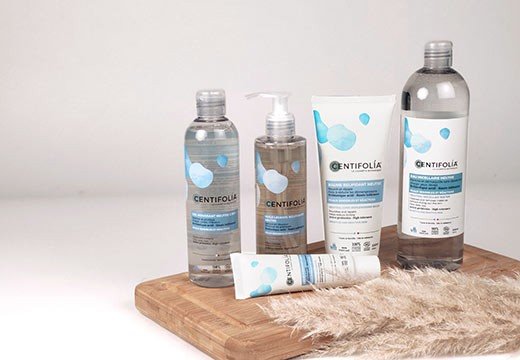
Centifolia offers you a neutral range, fragrance-free and with comforting textures, specially formulated with high-quality active ingredients and suitable for sensitive and reactive skin. The Neutral Centifolia range is formulated from anti-adhesion polysaccharides, known to soothe and protect the skin, as well as prebiotics which will nourish and rebalance the skin. This synergy of active ingredients helps prevent imbalance and restore the skin microbiota. The neutral range is also suitable for the care of different skin types.
– Facial care: neutral micellar water, neutral 3 in 1 foaming gel, neutral moisturizing cream
– Body care: neutral lipid-replenishing cleansing oil, neutral lipid-replenishing balm, neutral intimate hygiene care