





PARIS — James Cameron, the visionary behind some of the most technologically advanced films in cinematic history, is accustomed to pushing the boundaries of what is possible on screen. From the groundbreaking CGI of Terminator 2 to the immersive 3D world of Pandora in Avatar, his work has always been synonymous with the cutting edge.
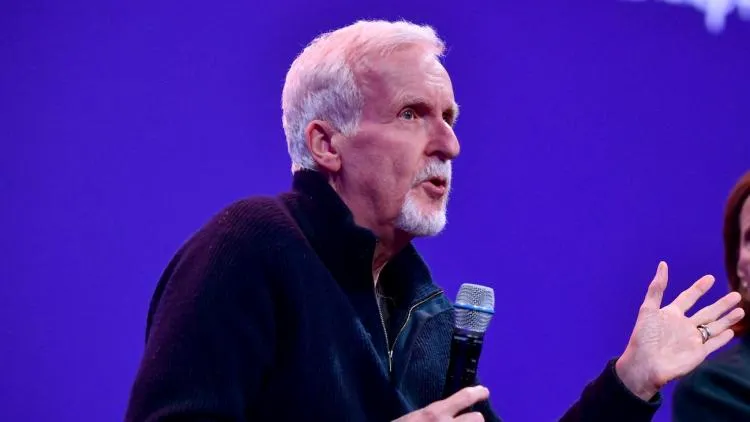
Yet, as the buzz surrounding generative Artificial Intelligence (AI) threatens to upend the entertainment industry, the celebrated director has revealed a stark moral opposition to the technology, calling the idea of AI replacing actors “horrifying.”
Speaking ahead of the release of Avatar: The Way of Water, Cameron used a recent interview on CBS Sunday Morning to draw a crucial distinction between his own highly technical methods and the emerging field of generative AI. For Cameron, while his films appear to be at the pinnacle of digital artifice, their underlying philosophy stands in direct opposition to the concept of machine-generated performance.
The Sacred Space: Performance Capture vs. Digital Creation
Cameron’s filmography, particularly the Avatar franchise, relies heavily on Performance Capture (often referred to as motion capture). This technique involves recording the nuanced movements, expressions, and vocal inflections of a live actor, using that data as a model that digital artists then interpret and apply to a computer-generated character.
For years, Cameron recognized that outsiders might mistake his reliance on digital intermediaries for a move toward automated performance.
“For years, it felt like we were doing strange things with computers and replacing the actors,” he explained, addressing the perception of his signature techniques. “But when you actually look closely, and you see what we’re doing, it’s a celebration of that privileged moment between the actor and the director.”
To Cameron, Performance Capture is an act of translation, not elimination. It is an advanced way to preserve and amplify the raw, human performance, allowing an actor’s essence—their micro-expressions, their breath, their timing—to be carried through into a fantastical digital body. The soul of the performance remains fundamentally, irrevocably human.
The ‘Horrifying’ Spectrum of Replacement
Cameron contrasts this philosophy with the cold mechanics of generative AI. He sees this technology as existing on the opposite end of the creative spectrum.
Generative AI operates on a completely different mandate: to create entirely new, non-existent content—including characters, visuals, and, crucially, performances—from scratch, often prompted by nothing more than a simple text command.
“At the other end of the spectrum is generative AI, which can create a character, an actor, a performance out of whole cloth from a text prompt,” he stated emphatically. “That’s horrifying… That’s precisely what we are not doing.”
Cameron’s deep-seated repulsion speaks to a broader, ethical anxiety gripping Hollywood. While technology has always been a tool to enhance human artistry, generative AI poses the first credible threat to replace the fundamental human element—the actor’s labor, their unique interpretation, and the creative collaboration between artist and director.
For the director who has spent decades using technology to craft emotionally resonant narratives, the idea that a machine could replicate the ‘privileged moment’ of human performance is not only creatively bankrupt but morally unacceptable. His stance solidifies a growing divide: between those who use technology as a brush to paint a human story, and those who see it as an engine to generate synthetic content.